

The Curious Case of Roger Craig
In honor of the Hall of Fame game...

As we approach this year's Pro Football Hall of Fame Enshrinement ceremonies, as 49ers fans, it provides the setting to reflect back on the success of this franchise and remember the stars that have made the move from the swirling winds of Candlestick Park to the bust room in Canton, Ohio. So many of the heroes of the scarlet and gold have been elected to football immortality, but one star from the 80’s dynasty has been unable to cement his status among football’s elite.
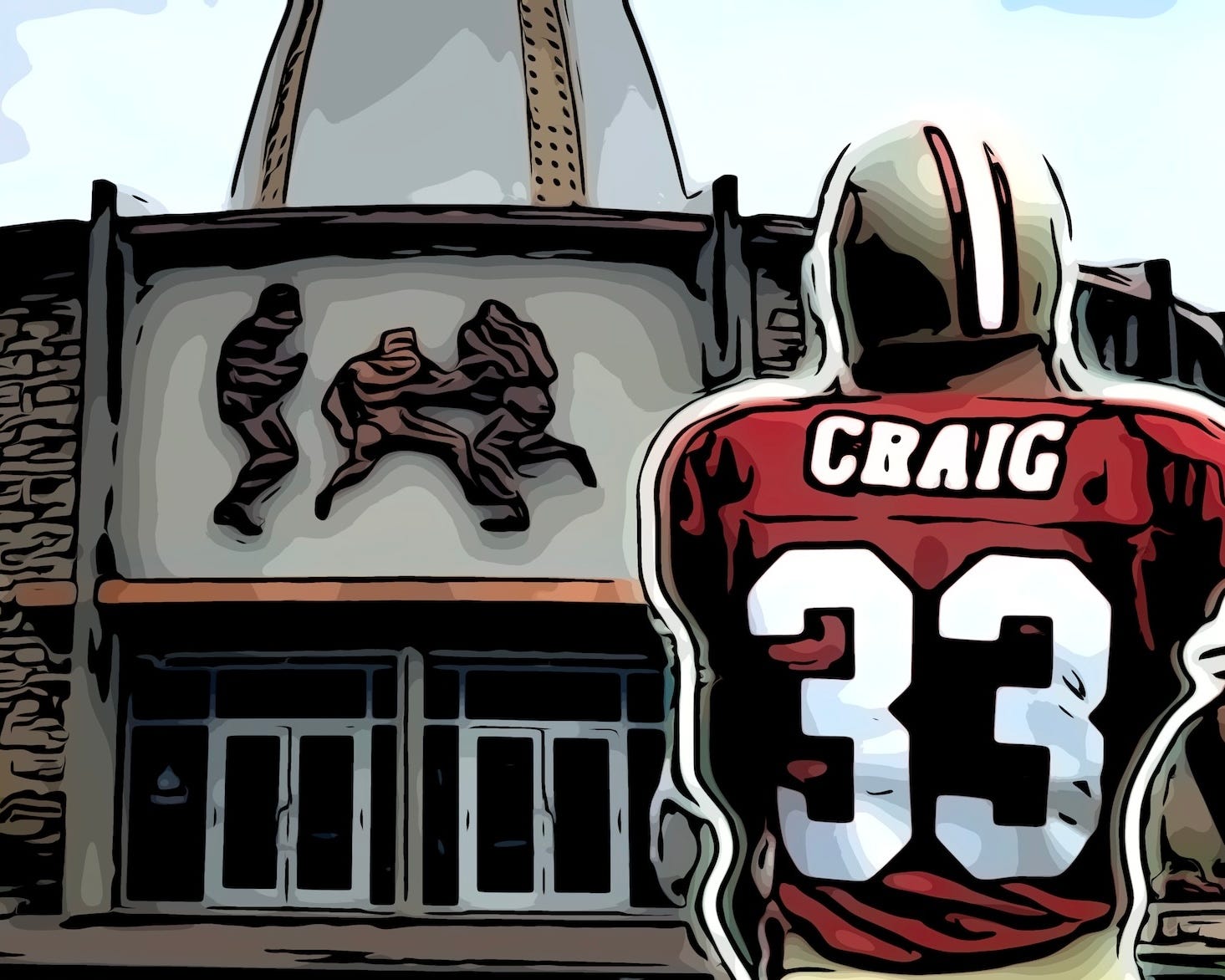
In his 11 NFL seasons, Roger Craig dazzled NFL fans by high stepping his way to three Super Bowl championships with the San Francisco 49ers. In the 31 seasons since his retirement, his legacy has not been able to have the same impression on Hall of Fame voters. During his eligibility as a modern-era candidate, Craig had only advanced to the finalist stage one time, in 2010. Since moving to the seniors category for the selection committee, the closest he has come was in 2024, as a semi-finalist. Despite all of the success that he enjoyed throughout his career, Craig has still been unable to break through the voting process.
As a second round draft pick, 49th overall in the 1983 draft out of Nebraska, Craig paid immediate dividends upon his arrival in the Bay Area. Accumulating over 1,100 all purpose yards and 12 touchdowns during his rookie campaign, he was only beginning to show his worth. During his time with the 49ers, Craig would accrue plenty of accolades to justify his entry into the Hall. On top of his Super Bowl victories, Craig was a 4 time Pro Bowler (as a Running Back and as a Fullback) and a member of the 1980’s all decade team. Craig is one of only three offensive players named to the All 80’s team not to be enshrined in Canton. Offensive linemen Joe Jacoby and Bill Fralic are the other two. In 1985, he became the first player in NFL history to eclipse 1,000 yards in rushing and receiving in the same season, while being named 2nd team All Pro. Craig also led the NFL in receptions in 1985 with 92 catches on the season. During the 1988 season, Craig was named 1st team All Pro, rushing for 1,502 yards and 9 touchdowns, and would be crowned the NFL’s Offensive Player of the Year.
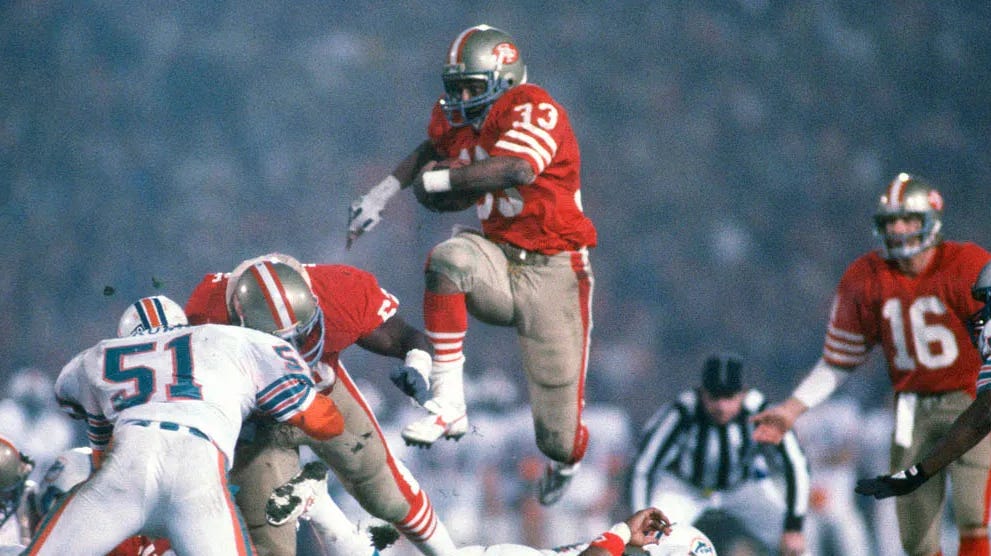
The highlight of Craig’s time with the 49ers came on the grandest stage. On January 20, 1985, the 49ers met the Miami Dolphins led by their superstar quarterback Dan Marino in Super Bowl 19. In a game that at the time would set a record for offensive output with 851 combined yards, Craig would rush for 58 yards, and have another 77 yards receiving. He would find the end zone frequently, scoring three touchdowns on the night. His performance, and high step, would be immortalized on the iconic Sports Illustrated cover following the game.
His tenure with the 49ers, however, would be jaded by an unceremonious ending. In his final game with the team, the 1990 NFC championship game, Craig would fumble away an opportunity for a 49ers three-peat. Holding on to a one point lead with 2:45 left in the fourth quarter, the 49ers had a chance to put the game away and advance to their third consecutive Super Bowl appearance. Steve Young had taken over at quarterback, replacing an injured Joe Montana, and had the offense to the Giants 41 yard line when Craig would fumble after an Eric Howard hit. Lawrence Taylor would recover and the Giants would go on to win, 15-13, on a Matt Bahr field goal. His last three years were unremarkable, playing the ‘91 season with the Raiders, and his final two seasons in Minnesota.
As shocking as his fumble was against the Giants, turnovers were not something that Craig was unfamiliar with. Over the course of his career, Craig would amass 42 total regular season fumbles, with another 6 in the postseason.
Roger Craig would finish his career with 8,189 rushing yards and 566 receptions for 4,911 yards and 73 touchdowns. Only 7 running backs that are currently enshrined in Canton have less total rushing yards than what Craig totaled in his career. Of those 7, only Terrell Davis and Larry Csonka played during the NFL’s modern era. Both have Super Bowl MVP’s in their resumes, with Davis also being awarded NFL MVP honors in 1998.
While the sportswriters' votes are subjective, one has to wonder: what is keeping Roger Craig from enshrinement? As a player that helped reinvent how the game was played offensively, being such an integral part of a high-powered west coast scheme, some would say that he was ahead of his time as a dual threat running back. Conversely, some believe that his production was due to playing in Bill Walsh’s revolutionary offense, and being surrounded, perhaps overshadowed, by legends of the game in Joe Montana, Jerry Rice and Steve Young. All of these men have long been enshrined in Canton.
It would be an injustice should Craig have to continue to wait several more years to unveil his bust to the world, but will 2026 be the year that Canton knocks on his door? Will he ever receive the gold jacket that has been as elusive to him as he was to NFL defenses? Only time will tell. This year will feature big names as first-time eligible players in Drew Brees, Larry Fitzgerald, and possibly the most important to Craig’s case, fellow 49ers alumni Frank Gore. While it would be incredible for both to be enshrined in the same class, having two running backs from the same franchise would almost certainly cannibalize Craig’s opportunity, as Gore would most likely get the nod as he sits at number three on the All Time Leading rushers list.
The question to ask is: Can you tell the story of NFL football in the 1980’s without Roger Craig, and is that enough to finally preserve his legacy in Canton?